Marokko ·
Imperial Cities, Desert Trek and Sea, 16 Days
- 16 days / 15 nights
- Private or group
16 days
Learn more

In the Moroccan dialect, Morocco is called “al-Maghrib”, meaning “the place where the sun sets”. On our journey through Morocco we experience several wonderful sunsets, whether in the sand dunes, on the sea horizon or between the mountains. The country reveals the full magic of the Orient, as in the fairy tale “One Thousand and One Nights”. We discover Morocco's rich culture in the four imperial cities: Fez, Marrakech, Meknes and Rabat. In the Atlas Mountains, the world of the Berbers, we meet Morocco's original inhabitants, the nomads. We ride dromedaries into the desert and spend the night in a Bedouin camp at the foot of the highest sand dunes under the shining stars. We hike through mighty gorges, visit ancient sites, marvel at gigantic oases, stroll through the labyrinths of kasbahs and souks, stop in picturesque little villages and enjoy the local dishes and the boundless hospitality of the Moroccan people.
This journey is suited to those looking for a balanced mix of cultural and nature experiences.
After your individual arrival in Casablanca, we will be waiting for you outside the airport building. (Unfortunately, under the new regulations only passengers are allowed to enter the airport building.) At the exit you will recognise us by the sign of our agency. A member of our team will welcome you and drive you to your hotel in the city centre. No activities are planned for today. Rest or explore the city, famous from the film of the same name, on your own. Our team member is at your disposal at any time with advice.
Driving distance 240 km, approx. 3 hours.
After breakfast, a short city tour awaits us. We visit the impressive Hassan II Mosque, one of the largest mosques in the world. At 210 metres, its minaret is currently the tallest minaret and the tallest religious building in the world. Unfortunately, it can only be viewed from the outside, as entry is forbidden to non-Muslims. However, we can enjoy a great view of the Atlantic coast and breathe in the freshness of the sea. We continue along a beautiful route beside the ocean to Rabat, the capital of Morocco. In Rabat we first look at the unfinished minaret of the city's largest mosque, which was likewise left unfinished. Construction was halted around the beginning of the 13th century, yet the massive complex remains the landmark of Rabat to this day. Within the complex, the mausoleum of Kings Mohammed V and Hassan II is also worth a visit. We then continue to the Kasbah of the Udayas, the impressive fortress that for decades belonged to a Berber dynasty (the Almoravids). After the tour of Rabat, we drive along the monumental city walls to Meknes, a city at the foot of the Middle Atlas. Overnight in a hotel in Meknes.
Driving distance 140 km, approx. 2.5 hours.
Today we do a lot of sightseeing and get to know some of the most remarkable places in Morocco. Surrounded by lush olive groves, the city of Meknes is one of the most beautiful cities in the country. The souks of Meknes are among the most striking and authentic in Morocco. The city wall and city gates are also very impressive. The most imposing gate, Bab Mansour, is one of the most important and prominent gates in Morocco and North Africa, alongside other remarkable gates such as Bab Lakhmis and Bab Berdaine. Meknes also impresses us with the largest water and grain storehouse in the country. We then drive to the holy village of Moulay Idriss Zerhoune (city founder and saint), where his mausoleum is located and which, because of its sanctuary, holds a special place in the hearts of Moroccans. There, at midday, we can enjoy local specialities prepared over an open fire. Then the ruins of the Roman city of Volubilis await us. It is one of the most significant archaeological finds in Morocco and was recognised as a UNESCO World Heritage Site in 1997. A short drive to Fez follows. Overnight in the riad “Mimosa Fes”.
Fez, a cosmopolitan city, combines the Middle Ages with the present. With around one million inhabitants, it is the third-largest city in Morocco. It is the oldest of the country's four imperial cities and was long regarded as the spiritual centre of the region. An excursion into the Middle Ages awaits us. We spend most of our time in the old town (medina), the model example of an Oriental city. We walk through the narrow alleys where time has stood still, shielded from the blazing sun by the closely packed ancient houses, admire the deep blue of the ceramics, regarded as the emblem of Fez, and view from the outside the old mosque and the first and, worldwide, most important university, Al-Quaraouiyine, built in the year 859 by a wealthy, devout young woman from Tunisia (Fatima Al-Fihri), the mausoleum of King Moulay Idriss II, a college from the 14th century, and the colourful, timeless souks with many small traders and craftsmen, where besides folkloric goods you can also buy fashionable luxury items. In the labyrinth of the old town's alleys we often hear the word “balak”, meaning “watch out”, because the merchants use carts and donkeys to transport their goods. Overnight in the riad “Mimosa Fes”.
Driving distance 470 km, approx. 7.5 hours.
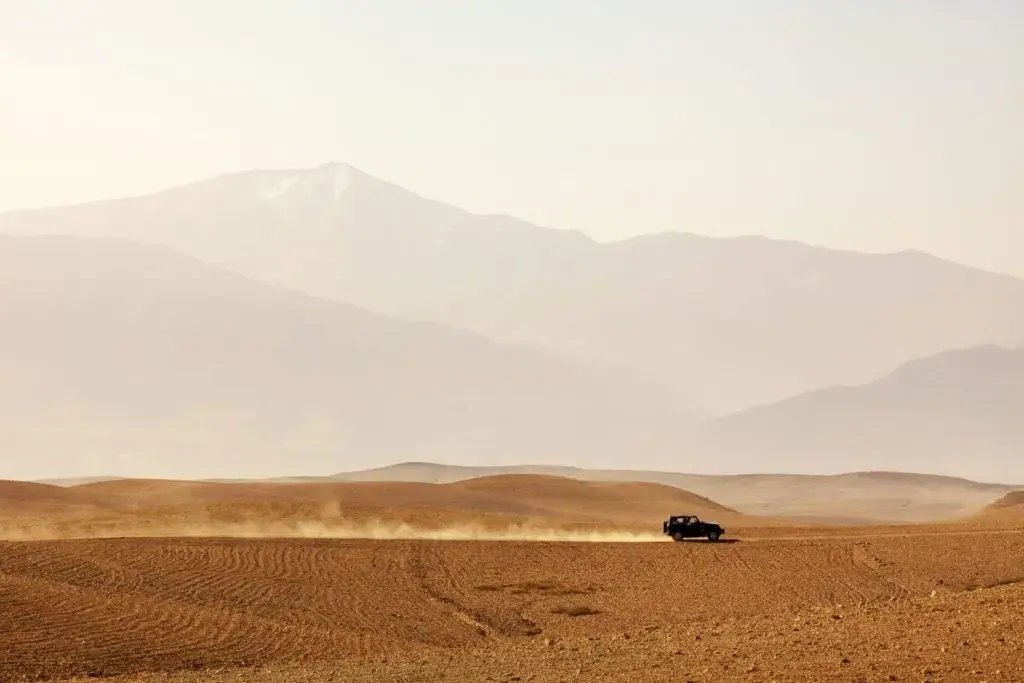
We gradually leave the north and now drive towards southern Morocco via the little village of Immouzer Kandar, also called a “sleeping beauty”. Neglected by tourists, it is a peaceful spot where the locals live from selling fruit, especially apples, walnuts and figs. Then we have a short stop in Ifrane, an exceptionally well-kept town whose buildings look European and modern. Because of the appearance of its towns and the picturesque surroundings, the region is called the “little Switzerland” of Morocco and is a popular place for summer visitors and winter sports enthusiasts. The Al Akhawayn elite university is a foundation of the kings of Morocco (Hassan II) and Saudi Arabia from 1995. We continue to the neighbouring town of Azrou, known for the largest cedar forest in North Africa. At the beautiful and very clear lake Aguelmame Sidi Ali, at an altitude of about 2,200 m, we take our lunch break. On our onward journey towards the small town of Errachidia, we cross the Col du Zad pass at an altitude of 2,178 m, known for its very steep gradient and narrow road. Shortly after Errachidia, the highlight of the day awaits us: an overwhelming view over the gigantic Ziz Oasis, one of the largest oases in Morocco, with 3 million date palms. Enclosed between the red mountains, the palms form an endless green river. Now it is time to arrive in Merzouga. The warm desert wind already touches us, the immense sand dunes appear more and more on the horizon, and the silence of the desert finally makes its presence felt. Overnight in the hotel “Ksar Bicha”.
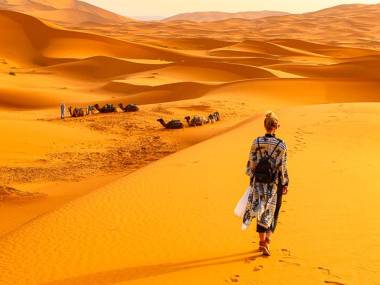
In the morning we relax by the hotel pool to slowly get used to the desert heat. In the afternoon, in the truest sense of the words, our caravan moves on: on the backs of dromedaries we ride through the desert, just like the caravans of the past. Our Bedouin camp lies at the foot of the largest sand dunes of Merzouga. Here we have an excellent opportunity to watch the sunset in the desert. With slow steps we now climb the dunes of Tamrdanit to the top to bid farewell to the sun. We have dinner by the campfire. We are in the right place to look up at the countless twinkling stars, the shining Milky Way and the moon. Overnight in the Bedouin camp in the heart of the desert.
Driving distance 250 km, approx. 3.5 hours.
After an early breakfast in the desert, we return on our “ships of the desert” to Merzouga and then continue by bus towards the urban town of Rissani, known for its spice and livestock market. We make a short stop there and stroll through its souks. After continuing, we visit the irrigation systems from the late Middle Ages and take a hike through the imposing 400 m high Todra Gorge and the surrounding palm oases. The gorge is formed of limestone and is known all over the world as a paradise for climbers. Finally, we drive to the oasis town of Boumalene Dades. Overnight in a youth hostel.
Driving distance 150 km, approx. 2.5 hours.
The route between Ouarzazate and Errachidia has become famous under the name “the Road of 1,000 Kasbahs”. The beautiful, ancient clay houses, the lush green of the oases and the reddish mountains appearing on the horizon together create unique, dreamlike pictures. After a break and a short walk in the Taourirte Kasbah, we hike on through a magnificent landscape until we reach the Kasbah of Ait Ben Haddou, which was declared a UNESCO World Heritage Site in 1987. Overnight in the hotel “La Kasbah”.
Driving distance 290 km, approx. 4 hours.
We begin our day with a walk through the labyrinth of alleys of the Kasbah of Ait Ben Haddou. From the highest point of the kasbah, a wonderful view opens up over the Ounila Valley and the Atlas Mountains, with a magnificent view of M'goun and Toubkal, the highest mountains in the country. Then we board the bus again and drive towards the Anti-Atlas, where the nomads of Ait Atta, the original inhabitants of Morocco, live. Nomads are also Berbers, who are constantly on the move from one place to another. For these people, livestock farming is the only way to earn a living. We drive on and have a unique opportunity to learn about the production of saffron and to buy genuine saffron. This area is also known for its carpet weaving from goat hair, camel hair or sheep's wool. At last we reach the town of Taroudant. Because of its importance and the architectural style of its walls and clay houses, it is called the “little sister” of Marrakech. Now we set off to discover this town on foot. Overnight in the riad “Hida” or “Ain Khadra”.
Driving distance 300 km, approx. 4 hours.
We drive through the land of argan trees to Agadir, the city known for its beautiful long beaches. Here we have the opportunity to have something to eat for lunch and to breathe in the fresh Atlantic air. Our route continues for hours along the Atlantic coast. In the coastal town of Tarazout, a little paradise for windsurfers and surfers, we stop to either take a walk or have a cup of coffee. In the afternoon we reach the port city of Essaouira, which has an indescribably sensual flair and captivates you from the very first minute. In 2001 it was added to the UNESCO World Heritage list. Together we discover this small town. We walk through the labyrinth of small, charming alleys of the old town up to the Skala de la Kasbah, a fortified place where a collection of 17th-century cannons stands. These were used in the past to defend the city against attacks from the sea. We continue down to the port of Essaouira, where you can watch the sunset on the sea horizon. At the port there are many stalls offering various kinds of fish. Overnight in the riad “Benatar”.
This day is yours. You can continue to discover the town, relax on the beach, walk for miles along the coast or join in the fishing and have your catch prepared fresh right away. Overnight in the riad “Benatar”.
Driving distance 190 km, approx. 2 hours.
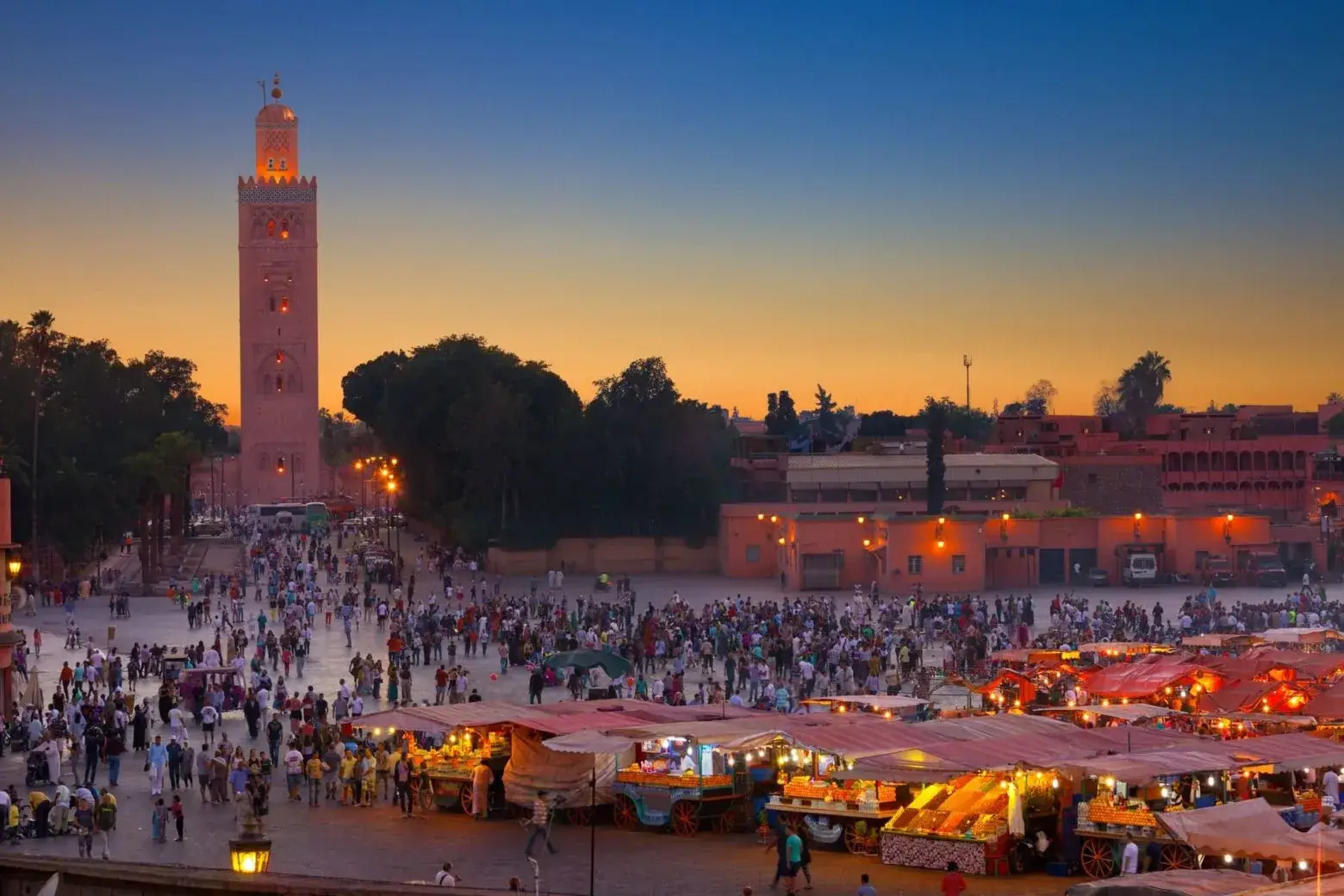
We drive to the “Pearl of the South”, Marrakech. In Marrakech you have free time. Rest or explore on your own the fairy-tale souks with their lively Oriental merchants and numerous colourful stalls. Our hotel is very close to Djemaa el Fna Square, where jugglers, snake charmers, storytellers, fortune-tellers, artists and musicians gather. There are numerous stalls offering culinary specialities of the region. Our team member is at your disposal at any time with advice. Overnight in the hotel “Racine”.
We discover the city on foot and visit the Bahia Palace, the Saadian Tombs and the Koutoubia Mosque (viewed from the outside), the largest mosque in southern Morocco and the emblem of the city. Then we stroll through the countless alleys and colourful souks of Marrakech. The afternoon is at your free disposal. Overnight in the hotel “Racine”.
This day is also yours. You have the opportunity to buy souvenirs and gifts or to relax in a traditional Oriental hammam.
After the transfer to the airport, you fly back to Germany.
15 days
Marokko ·